May 30, 2026 • Declan Harte • 9 min reading time • Specs verified June 5, 2026
Outdoor Antenna Showdown: Yagi vs. Omni for Home and Rural Booster Installs
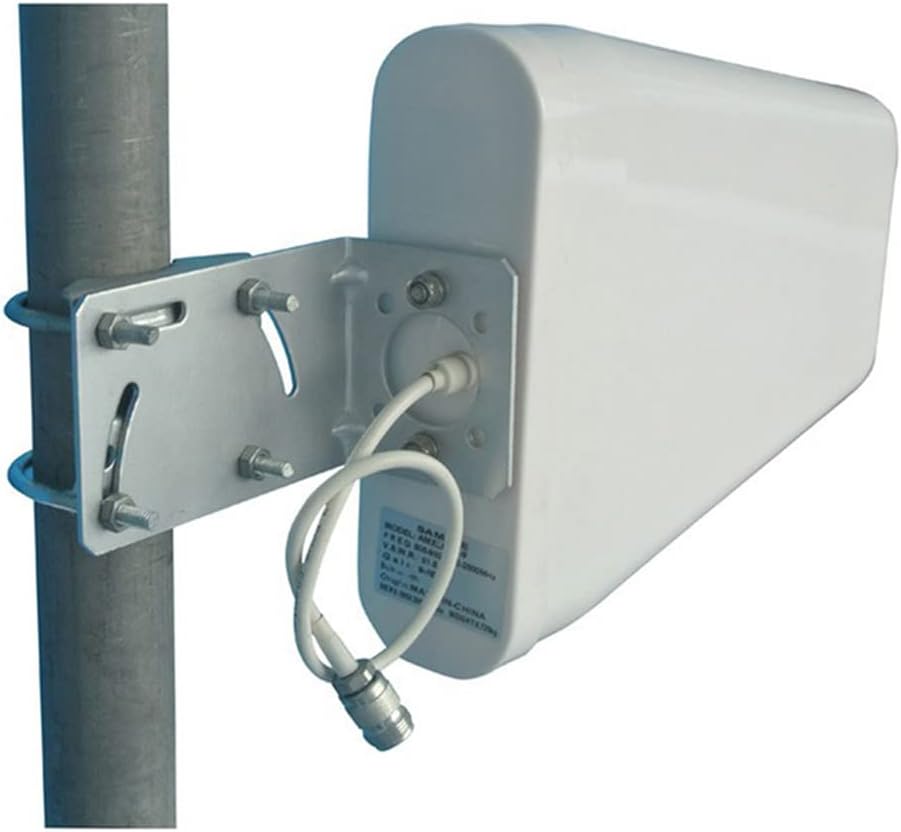
If you’ve ever looked at a signal booster kit and wondered why it ships with an antenna that looks like a TV aerial from 1987, you’re asking exactly the right question. A cell signal booster is a two-part system: an amplifier (the box that does the boosting) and at least one outdoor antenna (the component that actually finds the signal coming from the cell tower). The antenna is not an accessory — it is often the single variable that determines whether your $400 investment works brilliantly or sits in a drawer. The outdoor antenna has one job: pull in the weakest possible signal from the nearest cell tower and hand it to the amplifier with as little noise as possible. How well it does that job depends almost entirely on whether you picked the right type of antenna for your situation. This guide will walk you through the two dominant options — the Yagi (directional) and the omnidirectional — and give you a clear decision rule by the end.
What “Antenna Gain” Actually Means (and Why the Number Matters)
Before the comparison gets specific, one term does real work here: gain, measured in dBi (decibels relative to an isotropic radiator — think of it as a standardized yardstick). A higher-gain antenna doesn’t generate signal from nothing. What it does is concentrate the antenna’s energy in a narrower direction, which effectively amplifies the signal it collects from that direction at the expense of directions it ignores.
Here’s the practical implication. If the tower is 8 miles away and your phone shows one bar (roughly –110 dBm, which is about as weak as a signal gets before it becomes useless), a high-gain Yagi pointed precisely at that tower can pull in an additional 10–12 dB compared to a low-gain omni. In real-world terms, that’s the difference between a booster that has enough signal to work with and one that amplifies mostly noise. Wilson Electronics’ antenna selection documentation frames this precisely: the outdoor antenna’s job is to maximize the signal-to-noise ratio presented to the amplifier’s input, and gain is the primary lever.
By the numbers — typical published gain ranges:
| Antenna Type | Typical Gain Range | Beam Width (horizontal) |
|---|---|---|
| Yagi (directional) | 10–16 dBi | 30°–60° |
| Omni (omnidirectional) | 3–8 dBi | 360° |
| Panel / Log-periodic | 7–12 dBi | 60°–90° |
These ranges are aggregated from Wilson Electronics, SureCall, and Waveform product documentation as of early 2026. Individual products vary.
The Case for the Yagi: When Direction Is a Feature, Not a Limitation
A Yagi antenna looks like a horizontal boom with a series of parallel elements sticking out from it — the classic “fishbone” shape. Its narrow beam width (often 45° or less on newer models) means it collects signal from a tight cone in front of it while rejecting interference from behind and to the sides. That rejection is not a bug; it’s exactly what you want in several common scenarios.
Yagi for Rural Installs with a Distant Single Tower
If you’re on a 20-acre property and the nearest tower is in a specific direction — 7 miles north-northeast — a Yagi pointed at that tower will dramatically outperform an omni. Waveform’s outdoor antenna buyer’s guide (plain-text reference, available at waveform.com) recommends Yagis in any scenario where outdoor signal strength is already marginal (below –100 dBm) because the gain advantage compounds: a stronger input signal means the amplifier operates further from its noise floor, and the booster’s automatic gain control has more headroom before it throttles back. PCMag’s 2025 roundup of the best cell phone signal boosters similarly identifies antenna selection as the most consequential installer decision in rural setups, noting that high-gain directional antennas routinely rescue installs that would otherwise fail.
Wilson
$199.99
In stock on Amazon
Check price on AmazonYagi for Interference Rejection and High-Gain System Builds
Cell signal doesn’t travel in a vacuum. Neighboring towers on different carriers, industrial RF noise, and certain building materials generate interference that an omnidirectional antenna ingests from every direction. A Yagi’s rejection pattern — typically 15–20 dB front-to-back ratio on quality units — means interference arriving from the sides and rear is largely filtered before it ever reaches the amplifier. If you’re running a system like the Wilson Pro 70 Plus (rated at 70 dB gain) or a SureCall Fusion5X and need every dB the system can deliver, the outdoor antenna is where you either win or squander that potential. CNET’s 2025 review of enterprise-grade boosters notes that installer error at the antenna — wrong type, under-aimed, or mounted too low — is the primary reason high-specification commercial systems underperform in the field.
The tradeoff you’re accepting: A Yagi is locked to one tower. If you have meaningful coverage from two towers in different directions — common in suburban or semi-rural areas near a highway — a Yagi forces you to choose one and surrender the other. It also requires precise aiming. The 45° beam sounds forgiving until you’re on a roof in February trying to hit a tower 6 miles away with a compass app and no signal meter. For most rural installs, the answer to this inconvenience is: use your phone’s field test mode (accessible on both iOS and Android, it shows live dBm readings) and do the aim work once, correctly.
Wilson 314411
$62.99
In stock on Amazon
Check price on AmazonYagi Summary: Who Should Choose It
Choose a Yagi if your outdoor signal reads below –100 dBm and you have a dominant tower in one identifiable direction. Gain is more important than breadth in this scenario. Mount it as high as safely possible and use low-loss LMR-400 coaxial cable for runs over 30 feet to avoid eating back the gain advantage with cable loss.
Wilson
$199.99
In stock on Amazon
Check price on AmazonThe Case for the Omni: Coverage Breadth and Low-Maintenance Simplicity
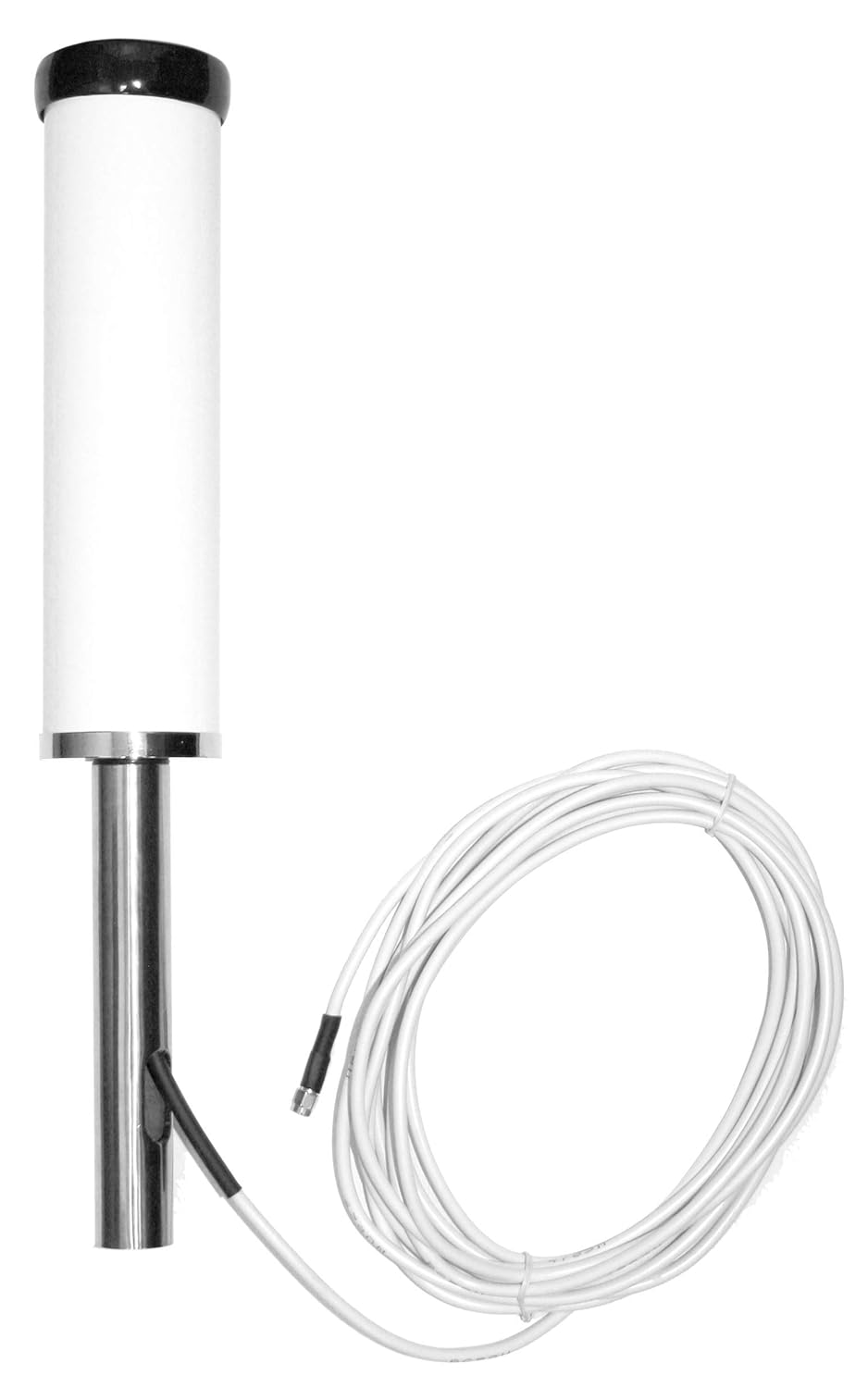
An omnidirectional antenna is a vertical whip or fiberglass tube. It radiates and receives in a 360° horizontal pattern, sacrificing gain for coverage breadth. The tradeoff is straightforward: you get less signal from any one direction, but you pull from all directions simultaneously.
Omni for Multi-Tower Suburban Environments
Suburban homeowners and mid-size office buildings in secondary markets often have usable signal from two or three towers in different directions. An omni captures all of them, and the booster selects the best input dynamically. If you’re installing a Wilson Pro 70 Plus or a Nextivity Cel-Fi PRO in a multi-story commercial building, an omni on the roof is often the correct outdoor antenna even when the amplifier is high-powered — because diverse uplink paths reduce the likelihood of a single tower handoff dropping your coverage. PCMag’s 2025 signal booster guide identifies this multi-tower scenario as the omni’s primary home installation use case, and CNET’s testing corroborates that suburban whole-home systems see the most consistent results when the outdoor antenna isn’t locked to a single bearing.
Wilson 314411
$62.99
In stock on Amazon
Check price on AmazonOmni for Vehicle, RV, and Marine Installs
This is the omni’s clearest use case. A vehicle moves. A Yagi pointed at the tower you were near 20 minutes ago is now pointing at a hillside. Wilson Electronics’ product documentation for the weBoost Drive Reach specifies an omnidirectional exterior antenna as the standard configuration for exactly this reason, and SureCall’s Fusion2Go 3.0 system documentation likewise specifies an omni as the correct vehicle configuration. The 3–5 dBi gain loss relative to a Yagi is the cost of not having to re-aim every 40 miles — a cost that is obviously worth paying when the antenna is mounted to something traveling at highway speed.
Bolton
$14.95
In stock on Amazon
Check price on AmazonOmni Summary: Who Should Choose It
Choose an omni if your outdoor signal reads between –85 and –100 dBm and you’re in a multi-tower environment, or if your antenna is mounted on anything that moves. The critical caution: if your outdoor signal is already below –105 dBm, an omni may not give the amplifier enough to work with. Waveform’s antenna buyer’s guide (plain-text reference, waveform.com) flags this as the most common mistake in rural installs — buyers choose an omni for simplicity and then wonder why the booster barely improves things. The math is unforgiving. A SureCall Fusion5X with 72 dB peak gain can only amplify signal that exists at its input. Feed it –108 dBm through a 4 dBi omni and you’re fighting uphill from the start.
Bolton
$14.95
In stock on Amazon
Check price on AmazonCarrier Compatibility and the 5G Question
Both antenna types cover the same frequency bands — the hardware is passive and physics-bound, not carrier-locked. A quality broadband Yagi or omni rated for 700 MHz through 2100 MHz will pass LTE Band 12, Band 71, Band 4, and Band 2 without modification. Per FCC Part 20.21 (the rule governing consumer signal boosters, detailed at fcc.gov/consumers/guides/signal-boosters), every antenna sold with a certified booster kit must be compatible with the amplifier’s frequency range; mismatched antennas are a compliance problem, not just a performance one.
On the 5G question: the FCC’s current Part 20 framework certifies boosters for low-band 5G (n71 at 600 MHz, n5 at 850 MHz) because these frequencies behave identically to LTE for passive antenna purposes. Mid-band n41 (2.5 GHz) and millimeter-wave are outside the current certification framework — no passive booster antenna can boost mmWave, and mid-band n41 requires carrier coordination that no consumer or commercial Part 20 device currently provides. Anyone selling a “5G booster” should be asked specifically which 5G bands the FCC certification covers. If they can’t answer, that’s a meaningful red flag.
The Decision Rule: If X, Then Y
You don’t need to agonize. Here’s the framework distilled from the guidance above:
If your outdoor signal is below –100 dBm AND you have a dominant tower in one direction: Use a Yagi. Gain is more important than breadth. Aim it precisely, mount it as high as safely possible, and use LMR-400 coax for runs over 30 feet.
If your outdoor signal is –85 to –100 dBm AND you’re in a multi-tower area: Use an omni. You have enough signal to work with, and coverage breadth will serve you better. This is the right call for suburban whole-home systems and most commercial pre-amplifier setups.
If you’re in a vehicle, RV, or on a vessel: Use an omni, full stop. The weBoost Drive Reach and SureCall Fusion2Go 3.0 configurations exist for exactly this use case, and directional antennas don’t survive mobility.
If your signal is above –85 dBm outdoors: Your antenna type matters less than indoor antenna placement and coax run length. At that signal level, both antenna types will saturate the amplifier’s input and the booster’s automatic gain control will step in to prevent overload.
If you’re unsure about your signal strength: Pull up your phone’s field test mode (dial *3001#12345#* on iPhone to access LTE field test; Android varies by manufacturer) and take readings in four cardinal directions from where you plan to mount the antenna. The strongest reading tells you both the direction to point a Yagi and whether your baseline is strong enough for an omni to succeed.
The antenna is not the glamorous part of a booster install. But it’s where the install is won or lost — and no amount of amplifier gain compensates for starting with the wrong one.